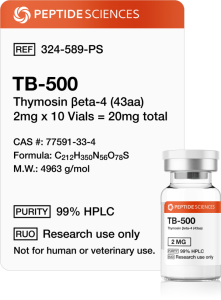
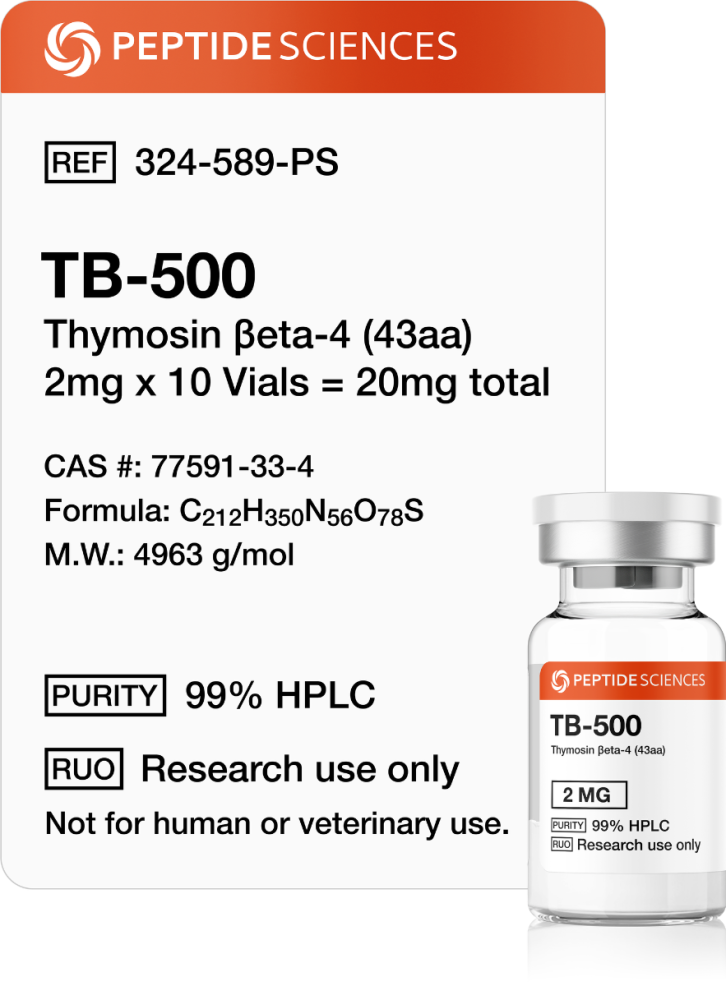
TB-500 (Thymosin Beta-4) (43aa) (2mg x 10 Vials = 20mg) test1

TB-500 (Thymosin Beta-4) is a 43 amino acid peptide sequence. In animal models, Thymosin Beta-4 has been shown to improve blood vessel growth, regulate wound healing, decrease inflammation, and reduce oxidative damage in the heart and central nervous system. Thymosin-beta-4 has a role in protection, tissue repair, regeneration and remodeling of injured or damaged tissues. It is also of active interest in anti-aging research.

$375.00

What Is TB-500?

TB-500 is a 43 amino acid synthetic analogue of thymosin beta-4 (TB-4), which is found naturally in nearly all mammalian cells. TB-500 is known for its effects on actin protein,cell migration, and wound healing. TB-50o has been shown in animal models and in vitro studies to improve blood vessel growth, accelerate wound healing, decrease inflammation, and promote extracellular matrix production. The peptide is under current investigation for its ability to reduce oxidative stress in spinal cord injury,improve recovery following heart attack, and for its many anti-aging effects.

TB-500 Mechanism of Action

TB-500 is the active domain of TB-4,which has a primary role as an actinbinding protein.Actin is a critical component of cell structure and makes up microfilaments.Microfilaments are responsible for giving cells their shape,protecting the integrity of cell membranes, allowing cells to move/migrate, and certain steps in cellular reproduction. Actin is also one of the primary components of muscle protein. Without actin, muscles could not contract. Actin binding proteins, like TB-4, sequester actin monomers, the individual units of actin, so that they are protected from degradation and are available for polymerization into microfilaments when needed.

TB-500 Research

1.TB-500 and Neurologic Function

Research in rats has found that TB-500 encourages central and peripheral nervous system tissues to undergo repair and remodeling following injury. Though the exact mechanism has yet to be elucidated, the research indicates that TB-500 activates the cells that support neurons. These cells, called oligodendrocytes, keep neurons healthy[] Boosting their activity actually improves blood vessel and neuron growth in brain regions that havebeendamaged,asignificant laboratoryresulthatis reflected in clinically significant improvements in behavior, motor control, and cognitive measurements[²].Recent research shows that TB-500 can reduce oxidative stress following spinal cord injury and help transplanted neural stem/progenitor cells (NSPCs) to survive long enough to enhance spinal regeneration[]. These findings could make TB-500 and other TB-4 derivatives of great use in treating severe spinal cord injury. TB-550 may offer critical
insight into spinal recovery that allows paralyzed individuals to regain use of affected body regions.
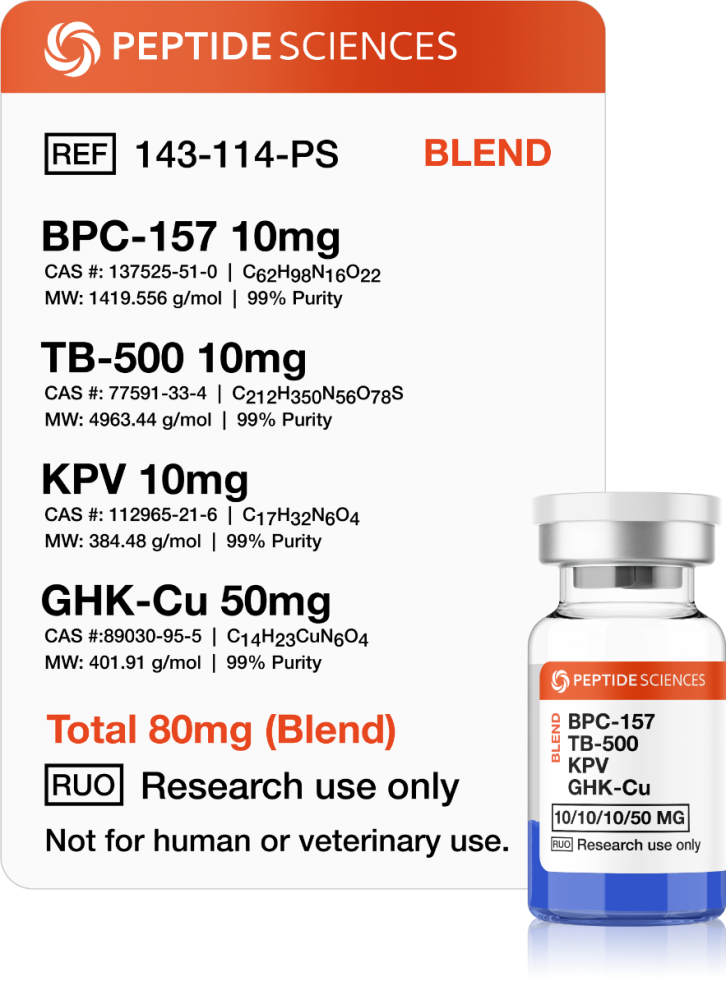
What Is TB-500?

TB-500 is a 43 amino acid synthetic analogue of thymosin beta-4 (TB-4), which is found naturally in nearly all mammalian cells. TB-500 is known for its effects on actin protein,cell migration, and wound healing. TB-50o has been shown in animal models and in vitro studies to improve blood vessel growth, accelerate wound healing, decrease inflammation, and promote extracellular matrix production. The peptide is under current investigation for its ability to reduce oxidative stress in spinal cord injury,improve recovery following heart attack, and for its many anti-aging effects.

TB-500 Mechanism of Action

TB-500 is the active domain of TB-4,which has a primary role as an actinbinding protein.Actin is a critical component of cell structure and makes up microfilaments.Microfilaments are responsible for giving cells their shape,protecting the integrity of cell membranes, allowing cells to move/migrate, and certain steps in cellular reproduction. Actin is also one of the primary components of muscle protein. Without actin, muscles could not contract. Actin binding proteins, like TB-4, sequester actin monomers, the individual units of actin, so that they are protected from degradation and are available for polymerization into microfilaments when needed.

TB-500 Research

1.TB-500 and Neurologic Function

Research in rats has found that TB-500 encourages central and peripheral nervous system tissues to undergo repair and remodeling following injury. Though the exact mechanism has yet to be elucidated, the research indicates that TB-500 activates the cells that support neurons. These cells, called oligodendrocytes, keep neurons healthy[] Boosting their activity actually improves blood vessel and neuron growth in brain regions that havebeendamaged,asignificant laboratoryresulthatis reflected in clinically significant improvements in behavior, motor control, and cognitive measurements[²].Recent research shows that TB-500 can reduce oxidative stress following spinal cord injury and help transplanted neural stem/progenitor cells (NSPCs) to survive long enough to enhance spinal regeneration[]. These findings could make TB-500 and other TB-4 derivatives of great use in treating severe spinal cord injury. TB-550 may offer critical
insight into spinal recovery that allows paralyzed individuals to regain use of affected body regions.